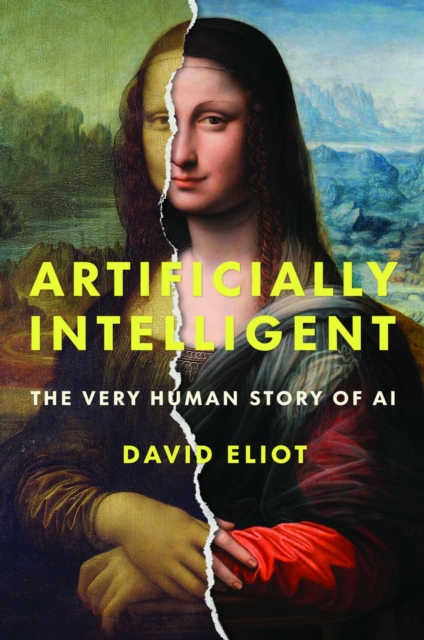
Review by Ivan Uemlianin
David Eliot’s Artificially Intelligent attempts an ambitious synthesis of AI history, technical explanation, surveillance critique, and political economy. His approach is anchored by a humanistic conviction that artificial intelligence is fundamentally a story about people, institutions, and choices.
The book’s genuine insight emerges in its insistence on AI as socially constructed technology. Eliot opens not with neural networks or training data but with Muḥammad ibn Mūsā al-Khwārizmī, the ninth-century mathematician whose name gave us “algorithm,” situating computational thinking within specific historical, cultural, and institutional contexts. He moves through Ada Lovelace’s mathematical education and constrained opportunities, Alan Turing’s wartime desperation and post-war persecution, the Cold War funding structures that shaped early AI research, and the contemporary corporate imperatives driving deployment decisions. Throughout, the argument is insistent: AI systems encode the values, constraints, and power relations of the people and organizations that produce them.
Continue reading International Friends of Ilyenkov