Review by Boris Groisman
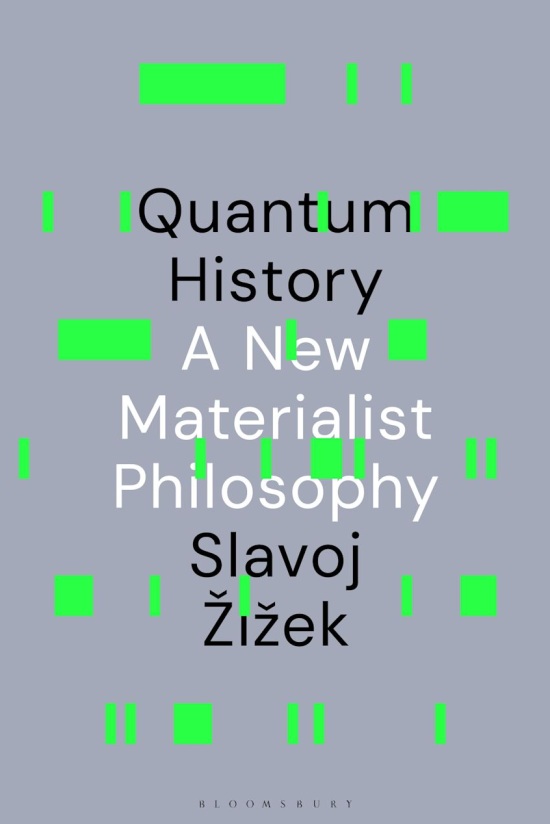
In Quantum History Slavoj Žižek presents a systematic attempt to revise the ontological foundations traditionally associated with Dialectical Materialism by critically examining the underlying assumption that reality and historical development are determinate and linearly constituted.
Drawing on resources from quantum mechanics, psychoanalysis, and continental philosophy, the book advances the thesis that both reality and history are essentially open, indeterminate and retroactively constituted. Consequently, political praxis should not be grounded in claims of necessity or certainty but must instead acknowledge contingency as its operative condition.
A materialistic philosophical outlook is often regarded as a natural ally of science. However, a paradox emerges within the achievements of scientific progress. As scientific inquiry delves further into phenomena that defy common sense and into theories that challenge established conceptions of reality, the appeal of spiritual or idealistic interpretations intensifies. In the presence of unresolved mysteries, there is a tendency to substitute rational analysis with metaphysical explanations. The question arises whether philosophy can protect science from the allure of spiritual and idealistic interpretations.
Continue reading International Friends of Ilyenkov