Notes, audio, video
Wednesday 11 February 2026
Discussion of Vladimir Voznyak’s reflections on Ilyenkov and Bosenko
Unfortunately, Vladimir could not make this session due to power cuts in Western Ukraine. We discussed his written reflections on his time in the philosophy scene of Ilyenkov and his Ukrainian protégé, Bosenko. We plan to do an event around Bosenko’s translated work.
Tuesday 9 December 2025
Isabel Jacobs presented
On the Soul: Ilyenkov’s Theory of Personality
In this presentation Jacobs reads Evald Ilyenkov’s theory of personality as a materialist reworking of Aristotle’s De Anima. In Ilyenkov’s philosophy of the thinking body, forms arise not inside the head but through social activity, labour, and embodied mediation. The self only comes to itself through encountering (and touching) the other. In this sense, the hand is the central organ of the soul, as a living, plastic, and relational tool of touch. The text also places Ilyenkov into dialogue with the Aristotelian Left, sketching out the possibility of an alternative genealogy of materialist philosophy. On the Soul will be coming out in Who Thinks Concretely? Essays on Evald Ilyenkov? edited by Isabel Jacobs, Martin Küpper and Trevor Wilson.
Isabel Jacobs is a Research Fellow at the Institute of Philosophy, Czech Academy of Sciences, working on Soviet and continental philosophy.
Thursday 16 October 2025
Reclaiming the reflection theory of truth
Siyaves Azeri and Martin Küpper presented their recent talk at the Institute of Philosophy – The Academy of Sciences of Czech Republic, Prague, in collaboration with Babes-Bolyai University, Faculty of Theatre and Film.
During the 20th century two front lines have emerged in Marxism between proponents and opponents of the concept of reflection. “Reflection” was linked to “Eastern Marxisms” in the Soviet Union, as it became a central principle in philosophy, political theory, and scientific methodology. Attacks on “reflection” were seen as attacks on historical socialism. On the other hand, reflection was identified with the physical process of mirroring. Both led to various attempts to refine “reflection” so precisely that it became a concept for “objective activity”, which has its origins in Marx’s view of Hegel’s philosophy.
Differentiating his materialist dialectical method, Marx states that in contrast to Hegel “the ideal is nothing but the material world reflected in the mind of man” (1992, 102). But “reflection” does not signify forming a mental mirror-image. Conceptualizing “reflection” requires grasping the concept of objective activity and labour and its role in cognition. Labour emerges in human society while at the same time is its constituting condition, that amounts to emergence of knowledge. Therefore, knowledge emerges only in and as the knowledge of social reality. As the purposeful activity of changing reality, labour is the continuous process of mutual transformation of thinking and reality. The objectivity of activity is rooted in the existence of the objective world as the condition and material of objective activity. Activity and thinking as one of its specific forms, is the mode of existence and the manifestation of the contradictory unity of thinking and being. The knowledge of objectivity, the knowledge of its existence as well as other properties of the world of objects is the “reflection” of the ideal as schema of activity in the world and the reflection of the form of objects in the schema of human activity. Hence, reflection signifies opening up to and accessing reality.
Our presentation shows how “reflection” can be seen as objective activity, discussing different approaches from 20th-century Marxist thought (e.g. E. Ilyenkov and H. H. Holz) that tried to interpret “reflection” in a productive manner.
Wednesday 24 September 2025
Martin Albert Persch introduced:
The Universal Animal: Dialectics of the first and second nature
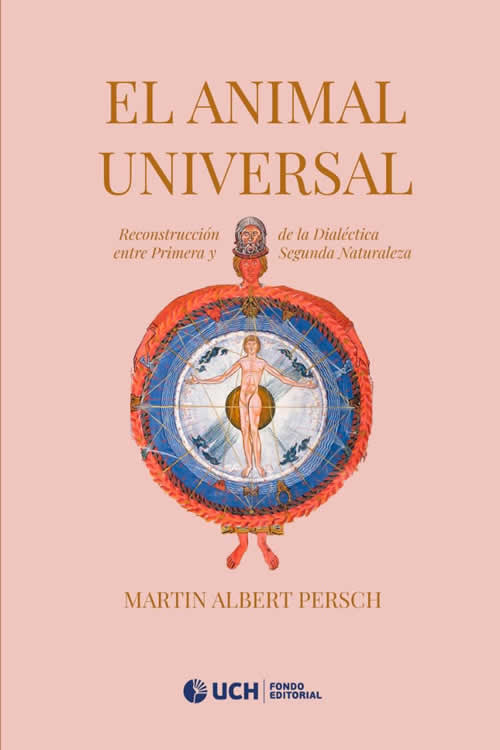
Martin is an anthropologist specialising in Amazonian studies, education and neuroscience, who has worked for more than 10 years with indigenous organisations in the Peruvian Amazon.
You can read his essay: The Universal Animal: Reason as the Active Principle of Human Nature – Marxism and Sciences
Tuesday 8 July 2025
Designing Ilyenkovian AI systems with Kyrill Potapov
We discuss the history and future of artificial intelligence systems through the lens of Ilyenkov’s work. How would Ilyenkov approach the design of AI systems?
Kyrill Potapov is Bridging Responsible AI Divides Research Fellow at UCL Interaction Centre.
Thursday 12 June 2025
An Enactive Account of Labour with Andrea Gambarotto
We discuss how a Marxist understanding of labor can inform cognitive science. Gambaratto presents a synthesis of key ideas of Marx, Engels and other major Marxist figures and principles of enactive cognitive science.
22 May 2025
The AI Fetish with Alex Levant (accompanied by Blue) and Alan Díaz
This is the first of our sessions exploring AI from a Marxist and Ilyenkovian perspective. Alex is Assistant Professor Communication Studies at Wilfred Laurier University. He has translated Ilyenkov’s Dialectics of the Ideal, and explored Ilyenkov’s ideas in a number of essays. Alan Diaz is a research student at Leuphana Universität Lüneburg. He has a background in critical theory and is interested in the historical development of abstraction and digitisation.
17 April 2025
Andrey Maidansky on his essay Ilyenkov and Freedom of the Will
We discuss an essay comparing Vygotsky and Ilyenkov’s Spinozism approaches to the problem of human will. http://dspace.bsuedu.ru/handle/123456… Andrey also discusses his project of preparing Ilyenkov’s collected works, Man and History, curated with Ilyenkov’s daughter Ilesh. The new volume (9) contains the full uncensored manuscript of Materialism Militant, i.e. Dialectical (aka Leninist Dialectics). Andrey works in the Department of the history of Russian philosophy, Institute of philosophy RAS (Moscow, Russia) and is Professor at Belgorod State National Research University.
18 March 2025 with Dr Olga Ivashchuk
How is Mozart Possible? On the Elective Affinity of Norbert Elias and Evald Ilyenkov
Revisiting a 1968 discussion between Ilyenkov and philosopher David Dubrovsky, Olga Ivashchuk shows that both British sociologist Elias and Ilyenkov revealed a special dimension of social history, the consideration of which is decisive to the success of the socio-genetic explanation of genius: the balance of social power of historical subjects. Olga’s presentation is based on her 2024 article in Voprosy Filosofi (Questions of Philosophy). Olga is a Doctor of Philosophy in the Department of Philosophy of the General Academic Faculty of RANEPA (Russian Presidential Academy of National Economy and Public Administration).
27 February 2025 with Andrzej W Nowak
Matter of Struggle: Ilyenkov vs. Actor-Network Theory and the Material/Ontological Turn
In this presentation, Andrzej seeks to interweave two strands of thought.The first, more general, concerns the question of whether artefacts/matter possess politics, a query previously posed by Langdon Winner (in his article „Do Artifacts Have Politics?”). Addressing this question necessitates an examination of political ontology. To this end, he proposes a juxtaposition of empirical philosophy inspired by Actor-Network Theory. While this approach offers valuable case-oriented studies of artefacts, objects, it does so at the expense of political and dialectical considerations. It is also important to note that one of the main proponents (Bruno Latour) of this theory is explicitly reactionary and anti-Marxist. In addition, Andrzej seeks to raise the question of why contemporary accounts of materialism and dialectics, including those inspired by Ilyenkov, offer so much in the realm of speculation while providing so little empirically oriented analysis of ‘matter, objects in action’, including the question of the politicity of matter.
4 March 2024 Alex Levant discusses his chapter “A ‘Special Reality’ with a ‘Peculiar Objectivity’: On EV Ilyenkov and Activity Theory” from the new book Activity Theory: An introduction.
Alex Levant discusses his chapter “A ‘Special Reality’ with a ‘Peculiar Objectivity’: On EV Ilyenkov and Activity Theory” from the new book “Activity Theory: An introduction”. https://cup.columbia.edu/book/activit… Alex is Assistant Professor of Communication Studies at Wilfred Laurier University. He has translated Dialectics of the Ideal, and explored Ilyenkov’s ideas in a number of essays.
30 March 2023 A Talk on Evald Vasiyevich Ilyenkov “Personality and Collective” with Kyrill Potapov
Activity & Knowledge – Ilyenkov on classroom pedagogy
Kyrill Potapov introduces Ilyenkov’s short essay on knowledge development and teaching. The discussion explores other aspects of Ilyenkov’s essay, like his criticisms of positivism. View video.
2 March 2023 A Contribution to a Conversation About Meshcheryakov by Evald Ilyenkov
We discuss Ilyenkov’s “A Contribution to a Conversation About Meshcheryakov”, introduced by Maxim Morozov. View the video.
13 January 2022 Discoveries in the Ilyenkov archive
Andrey Maidansky answers your questions. View the video and read the questions and answers.
7 November 2021 Dialectics as Logic
Olga Ivashchuk explores the essence of the Hegelian revolution in Logic, guided by Evald Ilyenkov. It’s an approach often ignored by the world of science and academia. Karl Popper will help us identify key arguments against the logic of contradiction and Ilyenkov’s counterarguments. Video
14 October 2021 Sergei Alushkin’s introduction to Fichte and Schelling through the eyes of Ilyenkov
Kant’s critique of pure reason left philosophy in a state of agnosticism and subjective idealism. Yet, it was not the end of philosophy as there were thinkers who continued its history with their critique of critical philosophy. Meet Fichte and Schelling in Ilyenkov’s Essay 4 “Principles of logic: Dualism or Monism?” From our discussion you will learn how to criticize solipsism from left and right, how the subject of cognition becomes the subject of history, what was alienation before Hegel and Marx and how monism relates to poetic intuition. Video
9 September 2021 Sergei Alushkin – Ilyenkov’s Dialectical Logic – Essay 3: Kant
Usually, dialectics are associated with Hegel, but Kant first broke through the wall of metaphysical thinking. Evald Ilyenkov reveals Kant as a revolutionary in logic, who did not fear contradictions. So what is Kant’s place in the history of dialectical logic? What are possibilities and limitations of formal logic? Who is the subject of thought? Our discussion of Essay 3 explores these questions and much more! Video
29 July 2021 Kyrill Potapov – Vygotsky, Ilyenkov and the Origins of Language
Today, Tomasello’s “neo-Vygotskian” model of language learning is among approaches representing the state of the art in psychology and primatology, describing what separates humans from other animals in terms of processes of enculturation. However, Tomasello falls prey to a number of Cartesian assumptions, relying on an innate capacity to share intentional states. In this session, I attempt to overcome this Cartesianism by pursuing an alternative route through the work of Vygotsky, Ilyenkov and contemporary findings, particularly in the work of biological anthropologist Terrence Deacon. Video
Kyrill Potapov is a PhD Candidate in Human/Computer Interaction at UCL taking a Vygotskian perspective on data interpretation and co-organiser of the IFI.
30 June 2021 The Dividual introduced by Joshua Simon
A preview of The Dividual, which pulls together contemporary and archival works, from video animation to installation pieces to the unpublished sketches of Marx and Engels, to contextualize the moment. Curator/author Joshua Simon introduces the exhibition, which runs 2-16 July at Leuphana University, Luneberg. Video of introduction to IFI.
27 May 2021 lyenkov’s Dialectical Logic: Chapters 1-2
Andy Brown is Professor of Economics and Political Economy at Leeds University. He offers an interpretation of chapters 1&2 of Ilyenkov’s Dialectical Logic, which (1) sets out Cartesian dualism as the fundamental problem of philosophy and (2) offers Spinoza’s doctrine of Substance as the most abstract and simple overcoming of that problem. Video
2021 Collective reading of Ilyenkov’s essay The Ideal (идеальное)
Part 1 – January 21: Video
Part 2 – February 4: Video
Part 3 – February 18: Video
Part 4 – March 4: Video
Part 5 – March 18: Video
Part 6 – April 1: Video
Part 7 – April 15: Video
Part 8 – April 29: Video – The Ideal from a Neurobiological Perspective: Lars Taxen introduces a reading of Ilyenkov in light of information systems and ideas from neurobiology + Part 8 of Reading
Part 9 – May 13: Video – This is the final part
November 27, 2020 Rogney Piedra Arencibia
Raising a glass to celebrate the bicentenary of Frederick Engels’ birth
Ilyenkov and Engels’ Dialectics of Nature: Interaction as the concrete-universal form of development
Presentation video
October 15, 2020 Professor Andrew Brown
Social activity as key to connecting mind and world video
September 10, 2020 Elena Mareeva presentation on S. Mareev and Ilyenkov’s Concept of the Ideal
July 24, 2020 Evald Ilyenkov and the development of Marxist thought
presentation by Alexander Surmava
Presentation video
July 10, 2020 Ilyenkov’s Dialectics of the Ideal and Engels’ Dialectics of Nature presentation by Rogney Piedra Arencibia
Presentation video
June 26, 2020 Mikhail Epstein, Professor of Cultural Theory and Russian Literature, Emory University Atlanta on Theories in Practice: How the Humanities Can Change the World based on his book The Transformative Humanities: A Manifesto (Bloomsbury, 2012)
Presentation video + chat + Powerpoint
May 29, 2020 On the social function of Soviet creative Hegelianism
Introduced by Olga Ivashchuk, Doctor of Philosophy, School of Public Policy, RANEPA, Moscow: Video of presentation & discussion
May 14, 2020 The ‘Ideal’ Match: On the Reality of Thinking
Introduced by Siyaves Azeri, associate professor of philosophy, visiting researcher, University of Lorraine, Archives Henri Poincare, Nancy, France
Video of presentation & discussion
April 24, 2020 Ilyenkov’s Workshop of Thinking by Maria Karakutsa of the Leport Literature Club in Kyiv: Presentation and Notes
March 4, 2020 International Friends of Ilyenkov discussion of Žižek’s critique of Ilyenkov and “Western Marxism” in Sex & the Failed Absolute (audio) introduced by Kyrill Potapov discussing his notes: Who failed? Failed who? Žižek’s critique of Ilyenkov.
December 19, 2019 Chapter 5 of Ilyenkov’s Dialectics of the Abstract and Concrete. Notes from Corinna, Giannis, Paul, Penny
October 22, 2019 Chapter 4 of Ilyenkov’s Dialectics of the Abstract and Concrete. Corinna’s notes are here. Kyrill’s critique of Paul Mason’s Clear Bright Future is here.
September 25, 2019 Penny Cole’s response to the July webinar, on the union of the logical and historical, is the basis for this day’s discussion.
July 10, 2019 Notes of the continuing discussion around Giannis’ paper Understanding and Reason as moments of the dialectical process of thought.
May 15, 2019 Notes of a continuing discussion on Keti Chukrov’s presentation and Ilyenkov’s Mystery of the Black Box.
January 22, 2019 What’s the ideal got to do with Brexit? Paul Feldman’s opening presentation, Penny Cole’s contribution, and Virpi Lund’s notes.
October 24, 2018 Notes of discussion on Chapter 4 of Ilyenkov’s The Dialectics of the Abstract and Concrete in Marx’s Capital
September 11, 2018 Dan McMahon’s introduction, and notes of further discussion on Chapter 3 of Ilyenkov’s The Dialectics of the Abstract and Concrete in Marx’s Capital
July 30, 2018 Notes of discussion on Chapter 3 of Ilyenkov’s The Dialectics of the Abstract and Concrete in Marx’s Capital
July 9, 2018 Notes of discussion The state in capitalist society and its role
May 29, 2018 Notes of discussion on Contradictions within the Ideal
March 13, 2018 Notes of discussion on Ilyenkov’s Dialectical Logic Essay 9
February 13, 2018 Lenin’s Dialectics. Notes of discussion on this essay by Professor Vesa Oittinen, Aleksanteri Institute, University of Helsinki, Finland
January 16, 2018 Corinna Lotz’ introductory presentation and notes for the discussion on the Dialectics of Hegemony
December 12, 2017 Notes on the continued discussion on Radical Currents in Soviet Philosophy: Lev Vygotsky and Evald Ilyenkov by Arto Artinian based on this article.
Comments and questions from Signe, David and Corinna.
November 7 and 14, 2017 Notes on the discussion on Radical Currents in Soviet Philosophy: Lev Vygotsky and Evald Ilyenkov by Arto Artinian based on this article.
December 1, 2016 Notes on Chapter three by Frank Hayes, Gerry Gold and Penny Cole
June 28, 2016 Marcelo J. S. Silva’s Powerpoint presentation : The concept as the reflection of objective reality in thought
June 6, 2016 Paul Feldman’s notes on The Dialectics of the Abstract and the Concrete in Marx’s Capital: Chapter 2 – The Unity of the Abstract & the Concrete as a Law of Thought
May 24, 2016 Monica Lemos’ paper (pdf) : COLLABORATIVE AGENCY IN EDUCATIONAL MANAGEMENT:CONSTRUCTING A JOINT OBJECT FOR SCHOOL AND COMMUNITY TRANSFORMATION
December 7, 2015 Corinna Lotz’s notes. on : The Concrete and the dialectics of the Universal and the Individual
July 6th, 2015 Corinna Lotz’s notes
April 14, 2015 Heli Kaatrakoski’s notes : The definition of the concrete in Marx
 International Friends of Ilyenkov